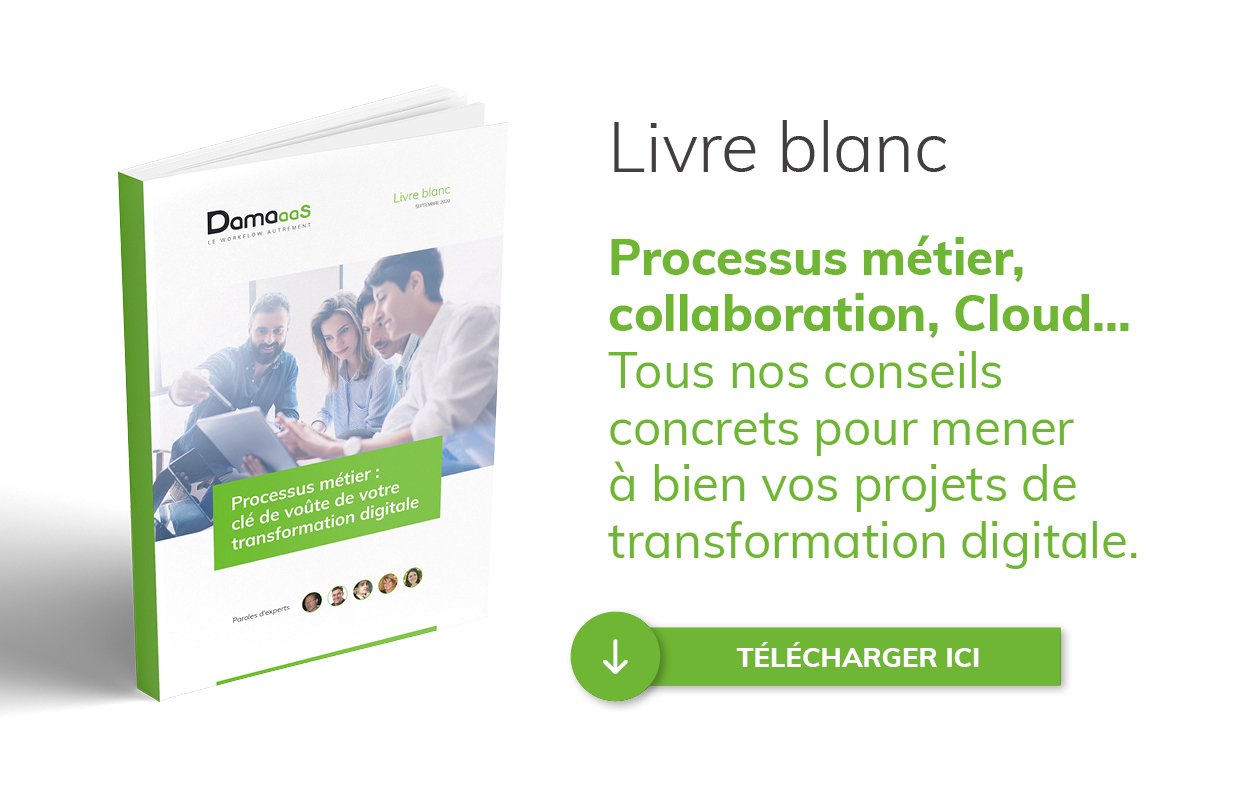

In recent years, process digitization has been a key focus for both small and medium-sized businesses and large corporations. And for good reason: it is essential to a successful digital transformation. Transforming your business through processes is a gradual process: it must be carried out step by step so as not to disrupt the entire internal organization.
Start with the business value
 The process digitization is a transformation initiative that must begin by examining business value. First and foremost, you must define the company’s objectives and strategy, then map out your existing processes to identify those that deliver the highest return on investment (ROI). To do this, ask yourself the following questions:
- Who initiated the project?
- What challenges are driving you to digitize your processes?
- Is this a general or specific need?
- What tools are used today?
- Are they underutilized?
- Can they be replaced by simpler tools?
This allows you to identify the priority processes and the challenges faced by the various departments so that you can prioritize process digitization initiatives.
Select an initial project
 While digital transformation aims to bring about a profound transformation of the organization as a whole, It is best not to take on too many projects at once. It is best to proceed gradually, starting with an initial project and then expanding it to other departments later on. As you know, changing all work methods too drastically or too quickly is highly risky! It is better to proceed process by process. This way, you can first observe the results on a small scale and adjust the method if they are not conclusive.
Taking a step-by-step approach helps alleviate employees’ concerns. Change management becomes smoother, and changes are perceived as improvements to which everyone has contributed. This personal investment is key to the success of such projects. Employees must be convinced that the changes implemented truly meet their needs and are not merely a passing trend. They need to visualize tangible growth and productivity goals in order to buy in.
Once your teams are on board and the first trial is a success, you’ll have a clear path to transforming your businesses.
Read more on this topic > Lagarde Autoclaves, an SME, is digitizing its customer support and compliance management
Expand the digitization of processes to transform your businesses
 Digital transformation goes hand in hand with agility. So, once you’ve successfully completed your initial project, you can start applying those tools to other projects, building on that initial experience. (For more information: Learn about the INAGUA project methodology)
This “scaling up” will be facilitated by the use of an agile software solution that adapts to everyone’s needs. Therefore, opt for an application that is custom-designed with your project teams and can be deployed quickly. DAMAaaS applications perfectly DAMAaaS these criteria: they require no coding (no specialized programming language) and are ready to run immediately. The result: you get your customized solution up and running in just three days. You then have the freedom to build other applications using the same approach, either independently or with the help of experts from the software publisher INAGUA.
In short, if you want to transform your business through processes, here are two tips: take it step by step and surround yourself with automation professionals who use agile methods. Change takes time to gain acceptance, but once it’s set in motion, you have to move quickly to avoid getting stuck uncomfortably between two worlds, between two methods, or between two tools… “Hurry slowly” would be the motto 🙂